
The 72-Hour Emergency Kit for Canadian Households
Water, food, meds, documents, warmth — and the family plan that turns a bin of stuff into something you can actually use.
Public Safety Canada asks households to be self-sufficient for 72 hours in an emergency. That's not because emergencies always last three days — it's because that's how long it typically takes for a serious storm, outage, or evacuation to stabilize and for outside help to reach everyone.
The kit is not exciting. But the households that build it before they need it are the ones who stay calm when they do.
Why 72 hours
Ice storms, wildfires, tornadoes, floods, and long grid outages all share a pattern: the first 24 hours are chaotic, hours 24–48 are the peak of demand on emergency services, and by hour 72 grocery stores, gas stations, and utilities start to return to normal. A household that can cover its own basics through that window doesn't add pressure to systems that are already stretched.
Water and food
- Water: 4 L per person per day × 3 days. Store commercially bottled or in food-grade jugs; replace every year.
- Non-perishable food: canned soup, beans, tuna, peanut butter, crackers, granola bars, dried fruit.
- Manual can opener.
- Special diets: baby formula, pet food, medications, allergy-safe substitutes.
- Rotate stock every six months to keep it fresh.
Warmth and shelter
- Wool blankets or a sleeping bag rated for your regional low.
- Warm layers for each family member (base layer, mid layer, hat, gloves).
- Hand and foot warmers.
- Emergency mylar blankets for the kit (light, cheap, effective).
- Tarp and paracord in case shelter is damaged.
Tools, light, and comms
- Battery or hand-crank flashlight; extra batteries.
- Battery or hand-crank radio (NOAA / Weatheradio Canada).
- USB battery pack, fully charged; charging cables for every device.
- Multi-tool or basic tool kit; duct tape.
- Whistle, matches or lighter in a waterproof bag.
- First aid kit — sized to your household.
- N95 masks (smoke and wildfire seasons) and hand sanitizer.
Documents and cash
- Copies of ID, health cards, insurance policies, and vaccination records in a waterproof bag.
- Photos of prescription bottles and dosages.
- A printed list of emergency contacts (in case phones are dead).
- $100–$200 in small bills and coins (debit/credit stops working in a wide outage).
- Extra house and car keys.
The family plan (this is the important part)
A perfect kit is worthless if the family isn't aligned. Sit down for 30 minutes and agree on these:
- Two meeting points: one near home, one outside the neighbourhood.
- An out-of-province contact everyone will text if local networks go down.
- Who picks up kids from school and daycare, and who is the backup.
- How pets get evacuated (carriers by the door, extra food in the kit).
- Where the utility shutoffs are — every adult in the house should know.
- What the family will do if the power is out for 24 hours, 48 hours, and 72+.
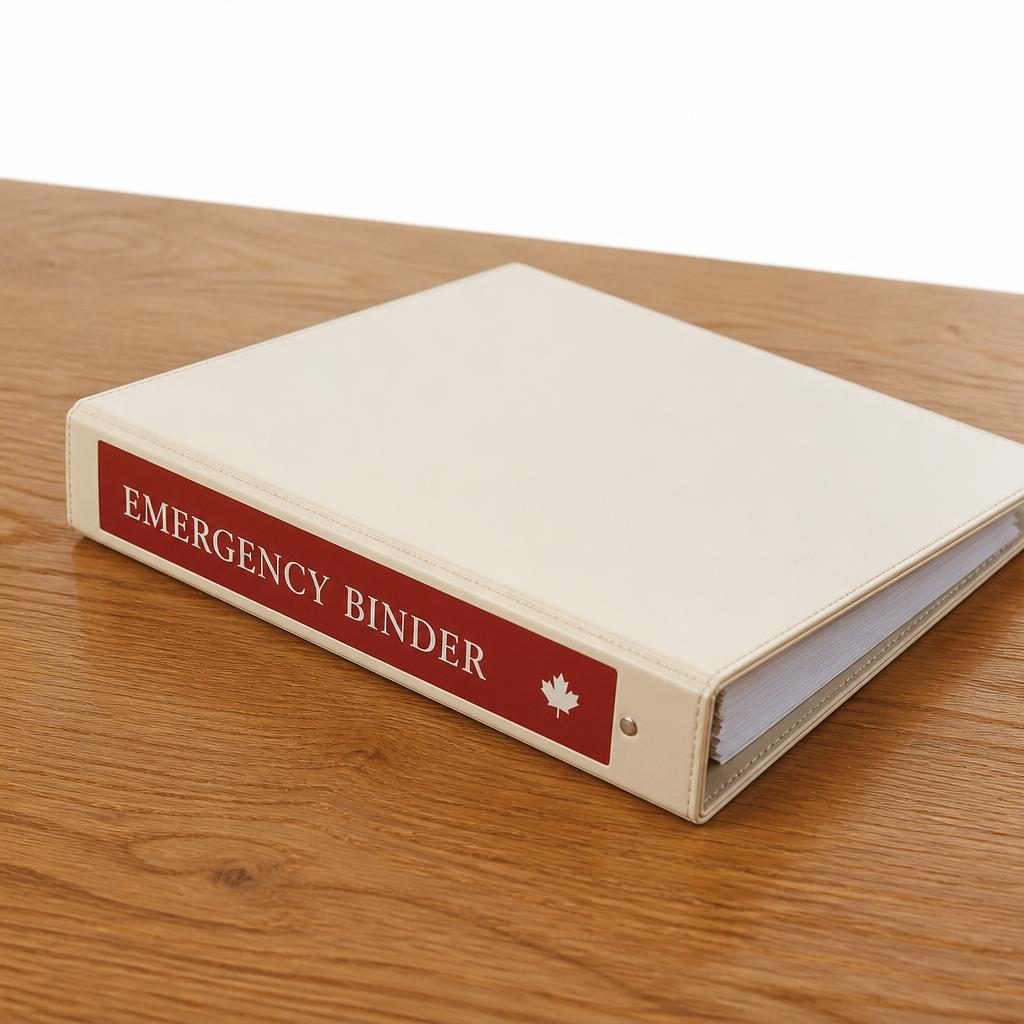
Turn this into a printable system
Every post pairs with a binder or checklist you can actually put on the fridge.
Take this with you: the free Family Emergency Binder Checklist
A printable PDF of the full checklist, emailed to you. The 7 sections every Canadian emergency binder needs, and what goes in each.
Frequently asked questions
Public Safety Canada recommends four litres per person per day for at least three days — two litres for drinking, two for hygiene and cooking. Add extra for pets and rotate stock every year.
Keep reading
- Vegan Grocery List Canada
The plant proteins, the B12 plan, and the hidden dairy and gelatin that sneak into packaged food when you're not reading every label.
- Paleo Grocery List Canada
Meat, fish, and vegetables are the easy part — the condiment aisle is where paleo actually gets broken without anyone noticing.
- Plant-Based Grocery List Canada
"Plant-based" and "vegan" aren't the same shopping list — this one is built around whole foods first, not packaged substitutes.