
Monthly Budget Checklist for Canadian Households
The 6-step monthly budget routine that keeps Canadian family finances on track — plus RRSP/TFSA/RESP guidance, a subscription cleanup, and cost-cutting strategies.
Quick answer
A monthly budget for a Canadian household needs 6 steps: (1) total after-tax income, (2) fixed costs (rent/mortgage, utilities, insurance), (3) variable costs (groceries, gas, kids), (4) savings + debt payments, (5) discretionary spending, (6) end-of-month review. Aim for 50% needs / 30% wants / 20% savings, and add a once-a-year subscription cleanup and an RRSP/TFSA/RESP review to the routine.
Want this as a printable PDF? It's free.
We'll email you Monthly Budget Checklist for Canadian Households formatted for 8.5×11, ready to print.
Budgeting isn't restriction — it's telling your money where to go before it disappears. This monthly checklist keeps a Canadian household in the black without spreadsheet fatigue.
Log your income
- Primary employment (net after tax + CPP + EI)
- Secondary income / side work
- Government benefits (CCB, GST/HST credit, provincial credits)
- Investment income (dividends, interest)
- Any one-time income (tax refund, bonus) — track separately
Fixed costs (same every month)
- Rent or mortgage
- Property tax and condo fees
- Utilities: hydro, gas, water, internet
- Home + auto insurance
- Phone plans
- Subscriptions (streaming, gym, apps)
- Loan payments (auto, student, LOC)
Variable costs
- Groceries
- Gas + transit
- Kids: activities, school, clothes
- Household + personal care
- Medical, dental, vet
- Dining out + takeout
- Entertainment + gifts
Savings + debt payoff
- Emergency fund (aim for 3–6 months of expenses)
- RRSP contributions
- TFSA contributions
- RESP for kids ($2,500/child to max CESG)
- Extra credit card / debt payments — highest interest rate first
- Sinking funds (car repairs, holidays, home repairs)
RRSP, TFSA, RESP & FHSA — which to prioritize
- RRSP: contribution room is 18% of last year's earned income (check CRA My Account for your exact number). Tax-deductible now, taxed on withdrawal — best when your income is higher now than it will be in retirement.
- TFSA: no deduction going in, but withdrawals are completely tax-free and unused room carries forward indefinitely. Flexible for any goal, not just retirement.
- RESP: contribute at least $2,500/child/year to capture the full Canada Education Savings Grant — a 20% match up to $500/year per child ($7,200 lifetime max per child).
- FHSA: combines an RRSP-style deduction going in with TFSA-style tax-free withdrawals for a first home. $8,000 annual limit, $40,000 lifetime limit — worth opening even years before you plan to buy, just to start building room.
- General order for most households: employer RRSP match (free money) first, then a starter emergency fund, then high-interest debt, then split further RRSP/TFSA/FHSA contributions based on your income and goals.
The annual subscription & account cleanup
- Once a year, list every subscription and recurring charge you can think of — streaming, apps, gym, software
- Check Apple subscriptions: Settings → your name → Subscriptions on iPhone/iPad
- Check Google Play subscriptions: play.google.com/store/account/subscriptions
- Check PayPal automatic payments: Settings → Payments → Manage automatic payments
- Cross-reference your last two bank/credit card statements for any recurring charge you don't recognize
- For every streaming service, ask: did anyone actually use it this month? If not, pause it
- Call your internet and cell provider once a year and ask for the current new-customer promotion
Gift & milestone planning
- Keep a running list of upcoming weddings, showers, and milestone birthdays for the next 12 months with an estimated gift amount for each
- Set a fixed holiday gift budget by October, not December
- For weddings you're attending, budget gift + outfit + travel as one line, not three separate surprises
- Big-ticket milestones (a child's wedding, a 50th anniversary) deserve their own dedicated savings line years ahead, not a surprise the month of
How to actually save money and cut costs
- Negotiate one recurring bill a year — a 10-minute call asking for the current promo rate saves most households $10–30/month
- Use a 24-hour rule for non-essential purchases over $100
- Automate savings transfers for payday, before you see the money sitting in chequing
- Track grocery spending for one full month before setting a target — most households guess wrong on their real baseline
- Review home, auto, and life insurance every 2 years — loyalty pricing creeps upward even when your risk hasn't changed
- Try a no-spend week once a quarter to reset discretionary habits
Questions worth asking your financial advisor
- Given my income and goals, should I prioritize RRSP or TFSA contributions first this year?
- Am I on track for retirement at my target age, based on my current savings rate?
- Does it make sense to consolidate old workplace RRSPs or pensions from previous employers?
- Are there tax credits or deductions I'm missing given my situation?
- What are your fees, and how are you compensated — commission, fee-based, or fee-only?
End-of-month review (30 minutes)
- Compare planned vs actual by category
- Flag any category over by more than 10%
- Adjust next month based on what you learned
- Move surplus to savings — don't leave it in chequing
Practical tips
- Do the review on the last Sunday of the month. Same time, same coffee, same 30 minutes.
- Automate everything you can — rent, savings, credit-card payments — so willpower isn't a monthly cost.
- Budget for irregular expenses monthly (car repairs, gifts, insurance renewals). Divide the annual by 12 and set it aside.
- If you want a full framework beyond this checklist, Dave Ramsey's Baby Steps (debt-payoff-first) and You Need A Budget (zero-based budgeting) are two well-known starting points worth a look.
Sources
- CRA — Important dates for RRSPs, RRIFs, RDSPs (contribution room)
- CRA — Canada Education Savings Grant (CESG)
- CRA — Contributing to your FHSA
Deadlines, dollar figures, and thresholds above were checked against these sources — July 2026. Rules change; always confirm current figures at the link before relying on them.
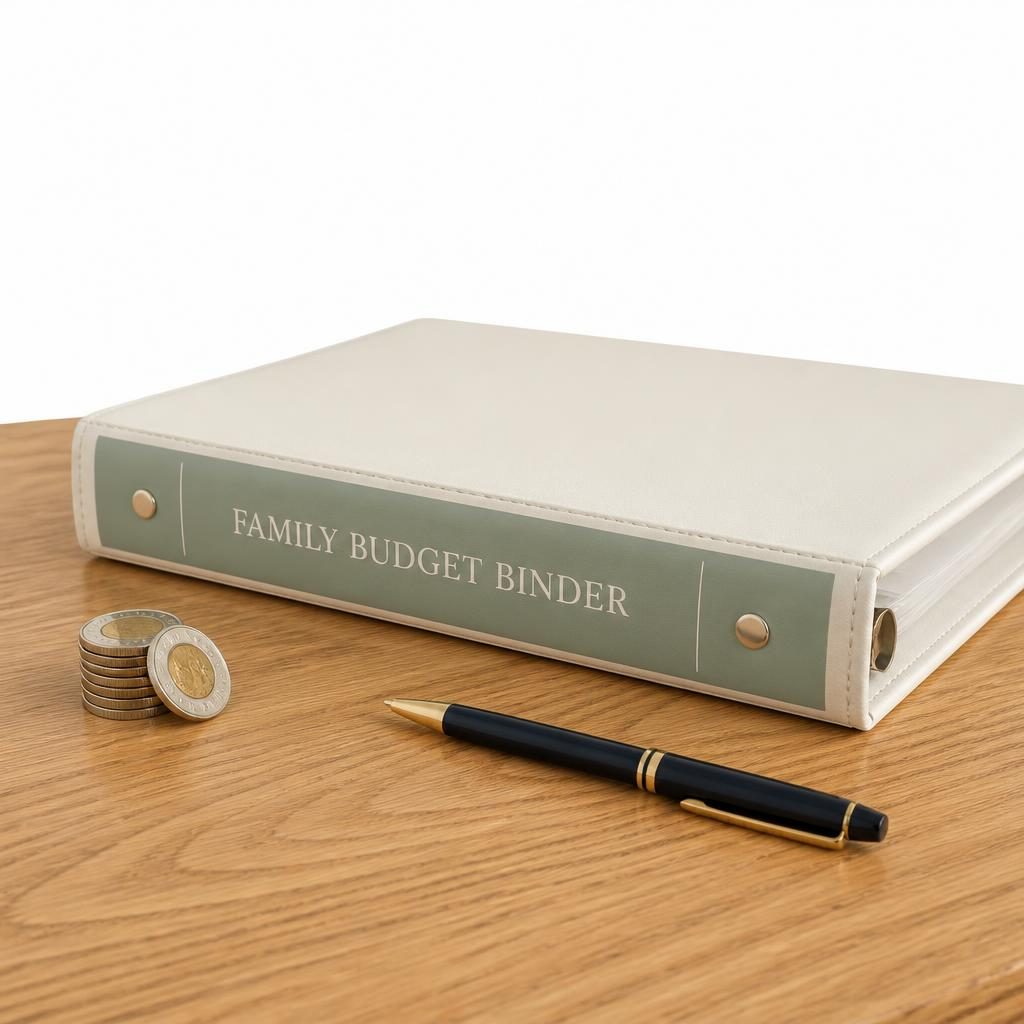
Want the printable version?
Get the matching printable binder — a one-time purchase, no subscription. Your download link is active for 30 days; the files are yours to keep and reprint.
Get the Complete Canadian Life Admin Bundle
Get every binder and every personalized checklist we offer. Your bundle includes personalized versions built around your household, plus the original ready-to-use binder PDFs.
Shop the BundleFrequently asked questions
50% of after-tax income to needs (housing, groceries, utilities), 30% to wants (dining, entertainment), 20% to savings + debt payoff. It's a starting point, not a law.
Related checklists
- Travel & Vacation Checklist for Canadian Travellers
The packing list, plus the Canada-specific parts most checklists skip — provincial health coverage abroad, CBSA limits, and passport validity.
- Marriage Checklist for Canadian Couples
Not the wedding-planning checklist — the legal one. The licence, common-law vs. married, and what actually needs updating after.
- Estate Planning & Executor Checklist for Canadian Families
Getting your own affairs in order, and what an executor actually does after a death — in the order it actually needs to happen.
- Wedding Planning Checklist for Canadian Couples
The month-by-month planning order — venue first, then vendors, then invitations — with your province's marriage licence timing worked into the right spot, not bolted on separately.
From the blog
- How to Build an Emergency Fund in Canada
Three to six months of essential expenses, kept somewhere it earns interest but isn't one tap away from a shopping cart. Here's how to actually build it.
- The Monthly Budget Checklist for Canadians
Income, fixed costs, variable costs, savings, RRSP/TFSA/RESP order, a subscription cleanup, and the 50/30/20 routine in one system.