
Moving in Canada: The Complete 8-Week Checklist
The eight-week plan Canadian families use to move without losing a health card, a security deposit, or their sanity.
Moving in Canada is a project — usually one that lands on top of jobs, kids, and a full weekend calendar. Doing it well is less about heroic effort on move day and more about starting eight weeks out with a clear list, then knocking two or three items off it every week.
This guide walks through the timeline most Canadian families use to move without losing a health card, a security deposit, or a spouse. Every step is written for a real household, not a moving company brochure.
Eight weeks out: build the plan
The first job is not packing. It's writing down a moving budget, your target move date, and the two or three constraints that decide everything else — school year, lease end, closing date, or a partner's start date. Everything after this hangs off those constraints.
- Open a folder (paper or digital) called Move. Everything lives there.
- Set a rough all-in budget: movers, deposits, utility hookups, cleaning, fuel.
- Pick a target move day, and a fallback day two or three days later.
- If you're renting, re-read your lease for notice period and cleaning clauses.
- If you're buying, confirm closing date and possession time with your lawyer.
Six weeks: quotes, paperwork, and school
Movers book up faster than most people expect, especially at the end of the month and the end of the summer. Six weeks is the sweet spot for getting three real quotes and locking in a date that isn't the leftover slot nobody wanted.
- Get three written quotes from Canadian Association of Movers members.
- Ask each mover: fuel surcharge, stairs, long carry, storage, minimum hours.
- Book school transfers — most boards need proof of address for the new catchment.
- Order any specialty packing supplies (mattress bags, wardrobe boxes, TV boxes).
- If you're moving provinces, note that you'll need a new health card and driver's licence within 30–90 days depending on the province.
Four weeks: pack, sort, and book the peripherals
This is the stretch where the physical move becomes real. The goal is to pack anything you won't touch in the next month — books, out-of-season clothes, decor, guest linens — and to book the small services that get forgotten at the last minute.
- Pack one non-essential room per weekend. Label boxes by room and priority.
- Book cleaners for your current place (many landlords deduct if this is skipped).
- Book a locksmith or plan a rekey for the new place.
- Arrange pet transport or a boarding day if you have dogs, cats, or reptiles.
- Do a first pass on donations — anything you haven't used in a year goes now, not on move day.
Two weeks: utilities and change of address
Two weeks out is when the paperwork phase begins in earnest. Every Canadian institution that sends you mail or takes money from your account needs to know the new address, and utilities need to be scheduled for the exact day of the move — not “sometime that week”.
- Set up hydro, gas, water, and internet at the new place; cancel or transfer at the old one.
- Book Canada Post mail forwarding — six months is enough for most households.
- Update your address with CRA, Service Canada, provincial health, driver's licence, and vehicle registration.
- Update banks, credit cards, insurance (home, auto, life), and any subscription that ships physical mail.
- Notify your employer's HR/payroll, especially if you're changing tax provinces.
The week of the move
The week of the move is not the week to sort things. It's the week to protect your future self: pack an open-first box, take meter readings and photos, and keep the essentials somewhere the movers can't accidentally load them.
- Pack an open-first box per family member: chargers, meds, toiletries, one change of clothes.
- Keep passports, birth certificates, SIN cards, and the move file in a bag you carry.
- Photograph the empty rooms in your old place; take utility meter photos on move day.
- Confirm arrival window with the mover and elevator booking (condos need this).
- Buy movers water and coffee. It costs $20 and buys measurable goodwill.
After you arrive
The first week in the new place is where most families burn out — everything is unpacked at once, nothing has a home, and the fatigue that was masked by adrenaline on move day arrives on a Tuesday. Slow it down deliberately.
- Kitchen and beds first. Nothing else matters on night one.
- Test smoke and CO alarms; change batteries if the previous owners left them.
- Locate the main water shutoff, breaker panel, and gas meter — write it in your household binder.
- Update provincial health and driver's licence within the deadline.
- Meet the immediate neighbours. It's easier now than in three months.
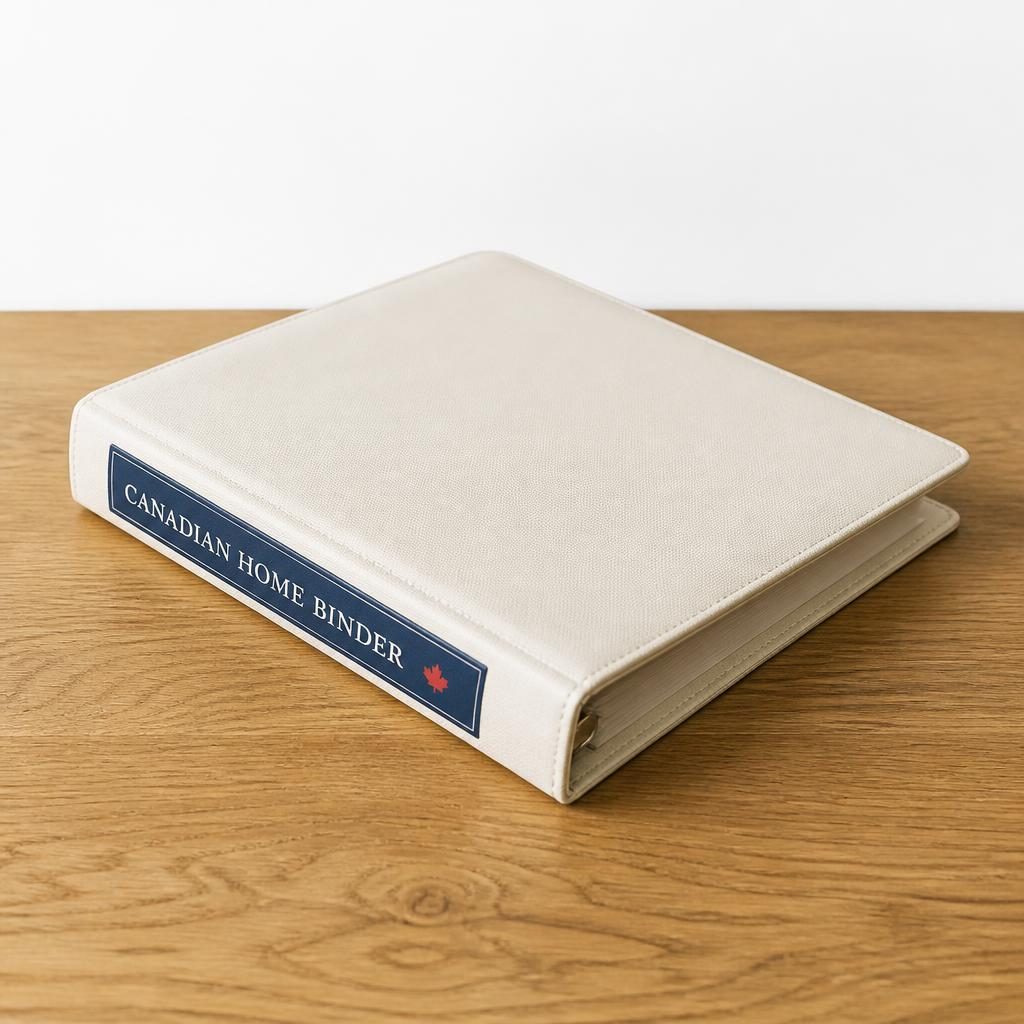
Turn this into a printable system
Every post pairs with a binder or checklist you can actually put on the fridge.
Take this with you: the free The Ultimate Printable Home Moving Checklist for Canadian Families
A printable PDF of the full checklist, emailed to you. Everything to do in the 8 weeks before, during, and after a Canadian move — packing systems, labeling, kids, pets, downsizing, and address changes in one printable checklist.
Read the checklist onlineAll free resourcesPersonalized version, CA$9
Frequently asked questions
Six to eight weeks out for a weekday move, and eight to ten weeks for the end of the month or end of summer. Movers in Toronto, Vancouver, and Montreal fill their end-of-month slots first, so flexibility on date is the fastest way to save money.
Keep reading
- Moving to a Different Province in Canada: What Actually Changes
Packing is the same no matter where you're headed. Your driver's licence, health card, and plates are not — here's what actually resets at the provincial line.
- How to Pack for a Move: Labeling Systems, the Open-First Box, and Moving Plants
A box labeled "misc" is a box nobody wants to open. Here's the labeling system, the packing order, and the one box that saves your first night.
- Moving with Kids and Pets: A Family Move Survival Guide
Moving day is the single highest-risk day for a pet to go missing — and the day kids feel the disruption most. Here's how to manage both.