
How to Organize Every Room in Your House
Most rooms get reorganized once and messy again in a month. Here's what actually holds — room by room, plus the habit that keeps it from sliding back.
Every room gets reorganized the same way — a burst of energy on a Saturday, bins from the store, everything labelled. A month later it looks like it never happened. The rooms that stay organized aren't the ones that got the most effort on day one; they're the ones organized around how the room actually gets used, with a system simple enough to maintain without thinking about it.
Pantry
- Group by category, not by container — baking, snacks, canned goods, breakfast — so anyone in the household can find and put things back without asking
- Decant into clear bins only for items you buy often (cereal, snacks, flour) — it's not worth the effort for everything
- Keep a running "add to grocery list" habit at eye level so you catch low stock before it's gone, not mid-recipe
- Store the heaviest and least-used items on the lowest shelf, everyday items at eye level, rarely-used items up top
Laundry room
- One bin per person if space allows — sorting happens at pickup, not at the machine
- Keep detergent, stain treatment, and dryer sheets in one caddy near the machine, not spread across a shelf
- A single shelf or hook for "needs mending / needs a button" keeps small repairs from disappearing into a pile
- If space is tight, a rolling cart under a counter beats permanent shelving — laundry rooms are usually the smallest room asked to do the most
Home office & desk
- Keep only what you touch weekly on the desk itself — everything else goes in a drawer or off the surface entirely
- One drawer per function: "active" (current bills, in-progress work), "supplies," "reference" — not one junk drawer for all three
- A single inbox tray for anything that needs action — mail, forms, receipts — cleared on a set day each week, not "whenever"
- Label cable and charger storage separately from office supplies — cords are the single most common desk-drawer clutter source
Closet
- Sort by category and colour, not by how recently something was worn — it's faster to find things and faster to see what you actually have
- Turn hangers backward at the season's start; anything still backward at the season's end is a genuine donate candidate
- Use vertical space before floor space — a second hanging rod or stackable bins beats a floor pile every time
- Store off-season items (bulky coats, out-of-season shoes) somewhere else entirely, even if it's just a bin on a top shelf, to free up daily-use space
If wire shelving and bins aren't enough space, see what a closet organizer system actually costs in Canada before you call a contractor — pricing varies a lot by closet size and whether you go wire, wood, or fully custom.
Home theater / media room
- Run cables before furniture goes in, not after — a cable raceway or in-wall channel is far easier to install with an empty room than around a couch that's already in place
- Keep remotes, controllers, and cables in one closed container near the seating, not scattered across a media console
- Store movies, games, and discs by household member or by most-used, not alphabetically — alphabetical only helps if everyone actually knows where the "M"s end
- A media console with closed cabinet storage keeps the visible surface clear even when the actual gear collection is large
- Label power strips and cable ends when you set the room up — it's the five minutes that saves an hour the next time something needs troubleshooting
Small spaces (apartments, condos, small bedrooms)
- Furniture that stores is worth more than furniture that just sits — a bed frame or ottoman with storage reclaims real square footage
- Vertical storage (wall shelves, over-the-door organizers, stackable bins) matters more in a small space than a large one, where floor space is the scarce resource
- One-in-one-out is a harder rule to skip in a small space, because the consequence of skipping it shows up immediately
- Every zone gets one job — a "everything drawer" is the first thing to fail in a small space, since there's no slack to absorb it
Guest room (especially if it doubles as an office or storage)
- Keep a dedicated bin or shelf of guest-only essentials — spare linens, towels, toiletries — so the room is ready without a scramble
- If it doubles as storage, keep guest essentials in the most accessible spot and overflow storage furthest from the bed
- A folding luggage rack or bench solves the "where do guests put their suitcase" problem that dual-purpose rooms usually miss
- Do a 10-minute reset after every stay — strip linens, restock toiletries, clear any guest clutter — rather than the day before the next visit
The habit that actually makes it last
Every system above fails eventually without a maintenance habit attached to it. The one that works across every room: a fixed 15-minute reset, same day every week, covering whichever rooms drifted that week. It doesn't need to be thorough — it needs to happen on schedule, before drift becomes a full re-organization project.
If your household already runs on a family command centre or a Sunday planning routine, attach the room reset to that existing habit instead of creating a new one — a system nobody has to remember to start is the only kind that survives past month two.
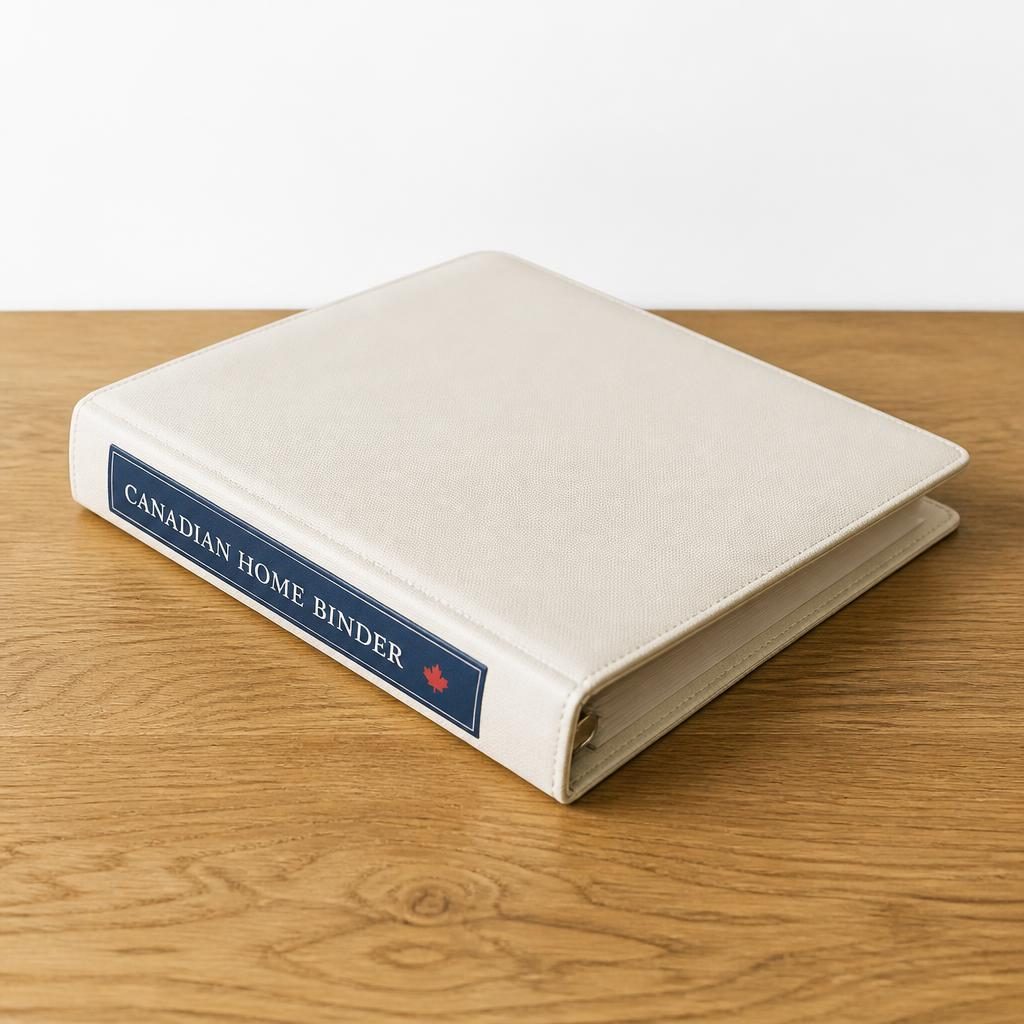
Turn this into a printable system
Every post pairs with a binder or checklist you can actually put on the fridge.
Take this with you: the free Family Command Centre Checklist
A printable PDF of the full checklist, emailed to you. The complete setup checklist for a family command centre that actually gets used.
Read the checklist onlineAll free resourcesPersonalized version, CA$9
Frequently asked questions
A fixed, recurring reset — the same day every week — rather than a one-time deep organization. Systems fail from lack of maintenance, not from a bad initial setup.
Keep reading
- Recycling Guide for Canadian Households
Canadian recycling rules vary by municipality, but the mistakes that contaminate a whole bin are the same everywhere — and most of them involve something people assumed was recyclable.
- The Meal Planning System That Actually Survives a Real Week
A meal plan that assumes a perfect week doesn't survive a real one. Here's the version built to bend without breaking.
- First Apartment: What to Actually Buy First
Full-registry checklists set you up to buy things you don't need yet. Here's the shorter list for what actually matters in week one.